
Lasers have quietly become part of everyday life, from the barcode scanner at your grocery store to the precision tools used in eye surgery and industrial manufacturing. As their power and range of applications grow, so does the risk they pose when handled incorrectly or built without proper oversight. Regulators, manufacturers, and employers across medicine, construction, cosmetics, and consumer electronics are responding by raising the bar for how lasers are built, labeled, and operated.
If you are a consumer, patient, or small business owner trying to understand why these changes are happening, this guide breaks down what is driving the shift and what it means for you.
Rising Laser Power in Consumer Products
Lasers sold to the public today are often far more powerful than the handheld pointers of a decade ago. Manufacturers have packed stronger diodes into smaller, cheaper devices, which means products once considered novelties can now cause real eye and skin injury. Regulatory bodies have noticed this trend and responded by tightening output limits and testing requirements before products reach store shelves. This shift protects consumers who may not realize how dangerous a seemingly harmless gadget can be.
- Handheld laser pointers now routinely exceed safe output levels sold years ago
- Imported devices sometimes bypass labeling requirements entirely
- Higher power creates greater risk of permanent eye damage from brief exposure
- Children and pets are especially vulnerable to unlabeled high-output devices
Medical and Cosmetic Laser Oversight Grows Stricter
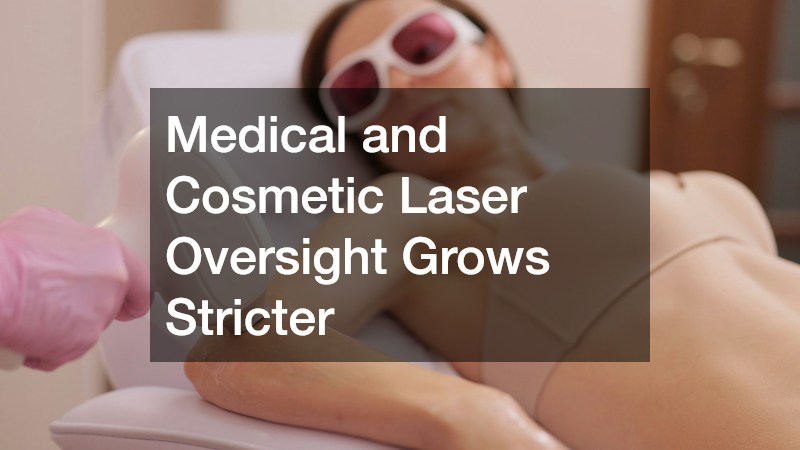
The medical and cosmetic industries have seen some of the most significant tightening, largely because lasers are now used for everything from tattoo removal to skin resurfacing in spas and clinics outside traditional hospital settings. As more non-physician practitioners operate these devices, states and professional boards have introduced stricter training and credentialing requirements to reduce burns, scarring, and other complications. Several states, including Texas and Rhode Island, now require a minimum number of supervised treatment hours before a technician can operate a device unsupervised, while others mandate separate credentials for each laser category, such as IPL, Q-switched, and fractional CO2 systems.
Pursuing laser certification has become a baseline expectation for technicians in many states, not just a resume boost, because it demonstrates verified training on specific device types and safety protocols. Employers increasingly check that certifications are current, since manufacturers update device settings and safety features regularly, and a credential earned five years ago on older equipment may not reflect what a technician handles today. Insurance carriers have taken notice too, with some malpractice policies now requiring proof of certification before they will cover laser-related claims at all. Clinics that skip this step risk both patient harm and costly liability exposure.
Beyond lawsuits, uncertified practice can trigger state board investigations, practice closures, and fines that often exceed the cost of proper training many times over. For medspas operating under a supervising physician who rarely sets foot on-site, this scrutiny is prompting a closer look at who is actually allowed to touch the equipment.
- Many states now require documented hands-on training before a technician can operate class 4 medical lasers, with some mandating 40+ hours of supervised practice before solo use
- A growing number of states also require a licensed medical professional (physician, nurse practitioner, or PA) to directly supervise cosmetic laser procedures, not just sign off remotely
- Insurance providers increasingly ask for proof of credentialing before issuing malpractice coverage, and may deny claims retroactively if training documentation is missing
- Device manufacturers often tie warranty support to operator training records, requiring certification renewal every 1-2 years to keep service agreements active
- Some manufacturers now issue device-specific certifications, meaning a technician trained on one laser brand isn’t automatically qualified to operate a competitor’s equipment
- Patients are encouraged to ask providers directly about their training background, including which certifying body issued their credential and when it was last renewed
- Med spas in particular face added scrutiny, as regulators crack down on non-physician owners delegating laser procedures without adequate oversight
Industrial and Manufacturing Safety Requirements Expand
Factories and fabrication shops have used lasers for cutting, welding, and engraving for decades, but the scale and speed of modern equipment have introduced new hazards. Automated laser systems can run unattended for long stretches, increasing the chance that a maintenance worker or bystander is exposed without warning. Industry safety organizations have responded with updated guidelines covering enclosure design, emergency shutoffs, and employee training refreshers. These changes reflect a broader recognition that workplace lasers need the same rigor applied to other heavy machinery.
- Enclosed laser cutting systems now require interlocks that stop operation when a panel is opened
- Workers must complete periodic refresher training rather than a single onboarding session
- Facilities are expected to post clear hazard signage near active laser zones
- Incident reporting requirements have become more detailed to track near-misses
Construction and Surveying Equipment Faces New Scrutiny
Laser levels, rangefinders, and alignment tools are common on construction sites, and their widespread use has prompted closer attention to classification labeling. A device marketed as low-risk but secretly operating above its stated class can expose workers to unexpected eye hazards over the course of a long shift. Regulatory agencies have started auditing import shipments more closely and penalizing manufacturers who mislabel output levels. This has pushed reputable suppliers to invest in more rigorous third-party testing before products reach job sites.
- Mislabeled laser levels have been pulled from shelves after independent testing revealed higher output than advertised
- Site supervisors are now expected to verify device classification before approving equipment for use
- Protective eyewear requirements vary depending on the laser class in use
- Imported tools face more frequent customs inspection for safety compliance
What Consumers Can Do to Stay Informed
Even with tighter rules in place, much of the responsibility for safe laser use still falls on the person holding the device. Reading product labels carefully, checking for recognized safety certifications, and understanding a laser’s class rating can prevent most avoidable injuries. This is especially true for parents buying toys or hobbyists purchasing engraving tools online, where enforcement is harder to guarantee. A little research before purchase goes a long way toward avoiding returns, injuries, or wasted money on noncompliant products.
- Check for a visible class rating label on any laser product before buying
- Avoid devices sold without a manufacturer name or safety documentation
- Research whether a product has been subject to any safety recalls
- Ask professional service providers about their training credentials before treatment
Conclusion
Tightening standards across these industries are not bureaucratic red tape; they are a direct response to real injuries and close calls that have piled up as laser technology has become more powerful and more accessible. Whether you are shopping for a home gadget, scheduling a cosmetic procedure, or hiring a contractor, taking a few extra minutes to verify safety credentials and product labeling can prevent serious harm. Understanding these changes now puts you in a better position to ask the right questions and make safer choices going forward.
